
H1 2026
The State of US Private Equity Report
Executive Summary
In this report, we go deep into the PE landscape in the US. We share insights on entries, exits, multiples, add-ons, holding periods, growth rates, margins and much more. Here is a summary of our key findings:
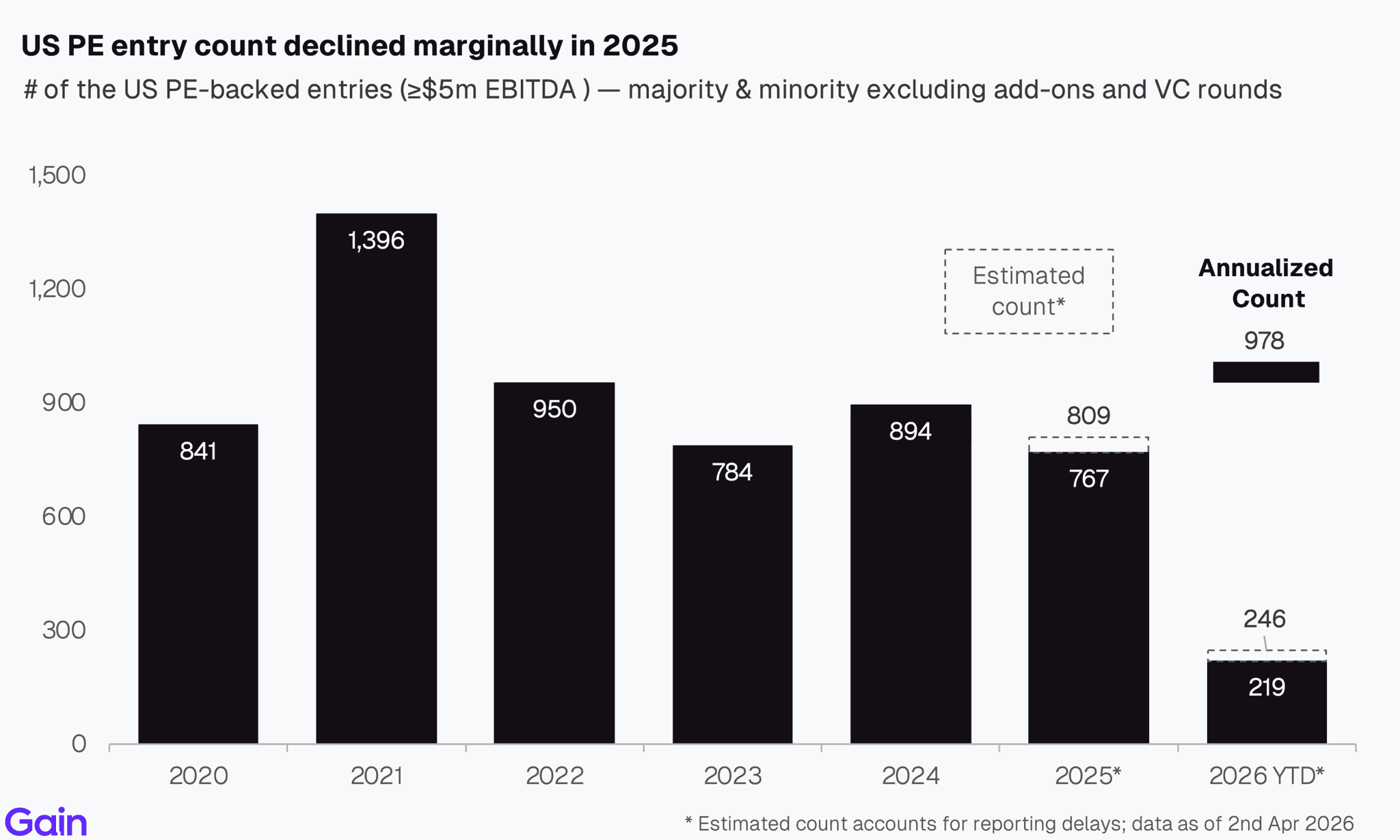
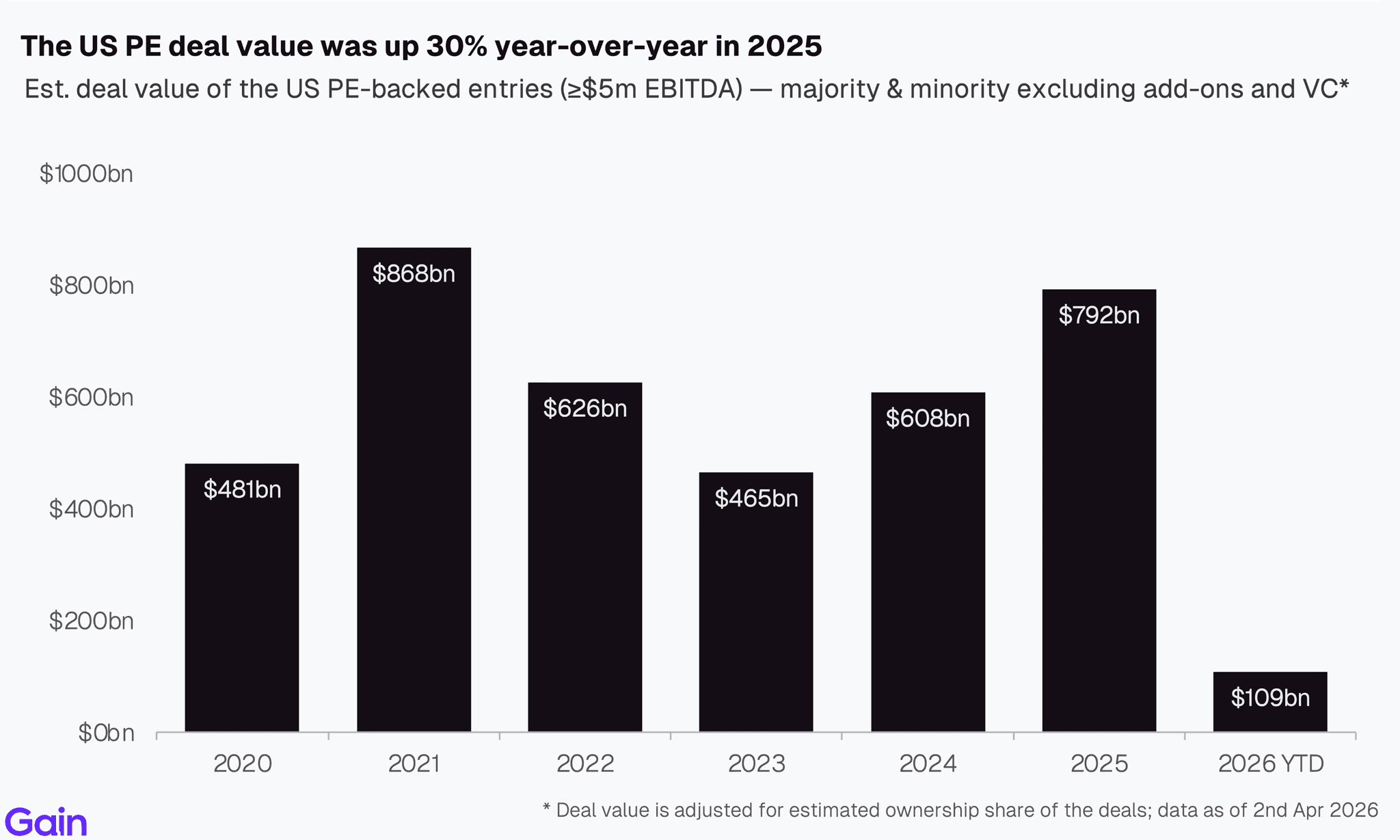
US PE entry count declined marginally in 2025, down 10% year-over-year. In contrast, deal value was up 30%. This divergence was driven by a surge in large-deals (>$1bn EV), which accounted for 81% of all deal value, up from 64% in 2020. Early 2026 activity points to a stronger start by count, though deal value has been lower, with large public-to-private transactions almost non-existent.
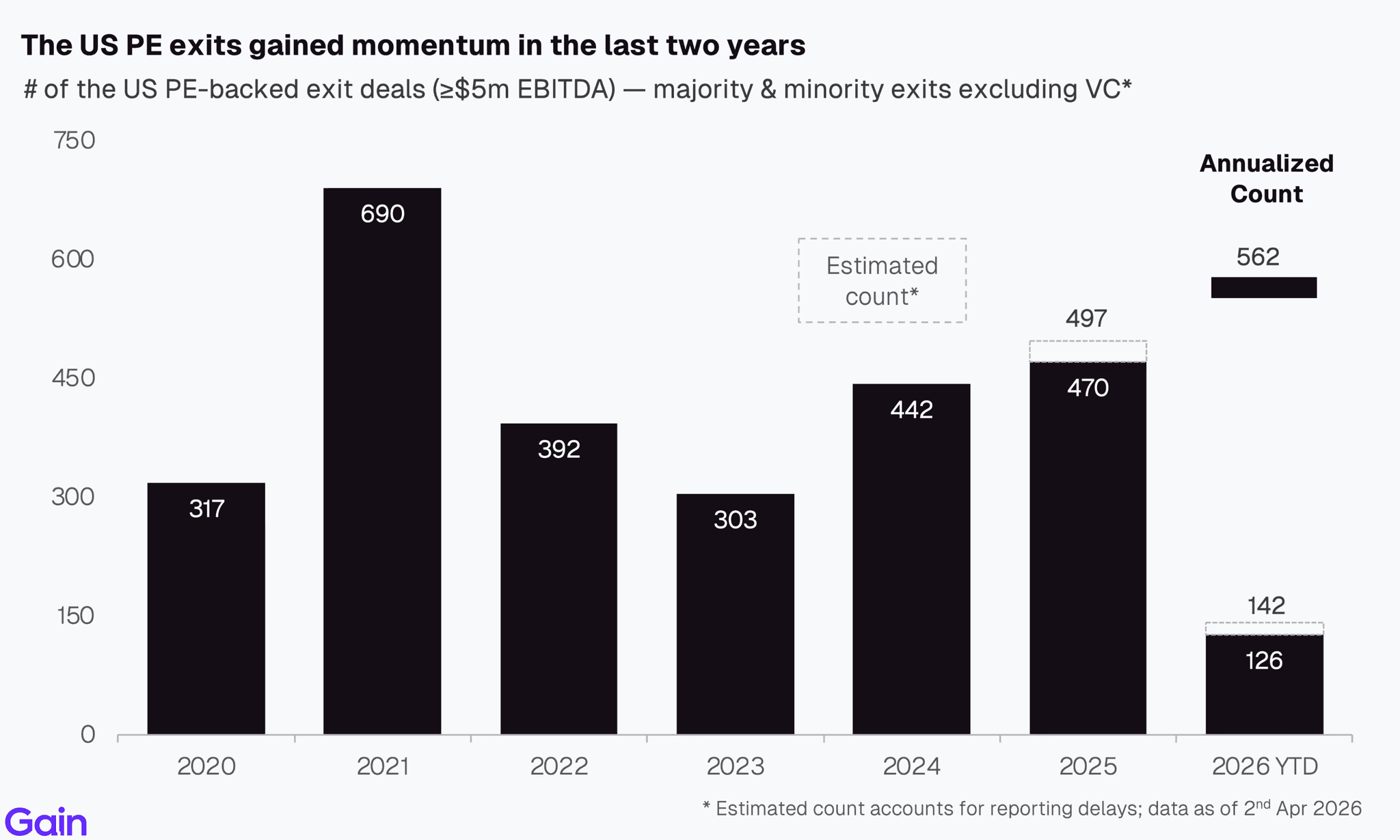
US PE exits gained momentum, with exit count rising 12% in 2025 and exit deal value jumping 72% year-over-year to $599bn. The share of $1bn+ exits rose from 71% of deal value in 2024 to 82% in 2025. Software exits, which accounted for ~15% of all US PE exits (>$5m EBITDA) on average, have fallen to just 10% of exits this year.
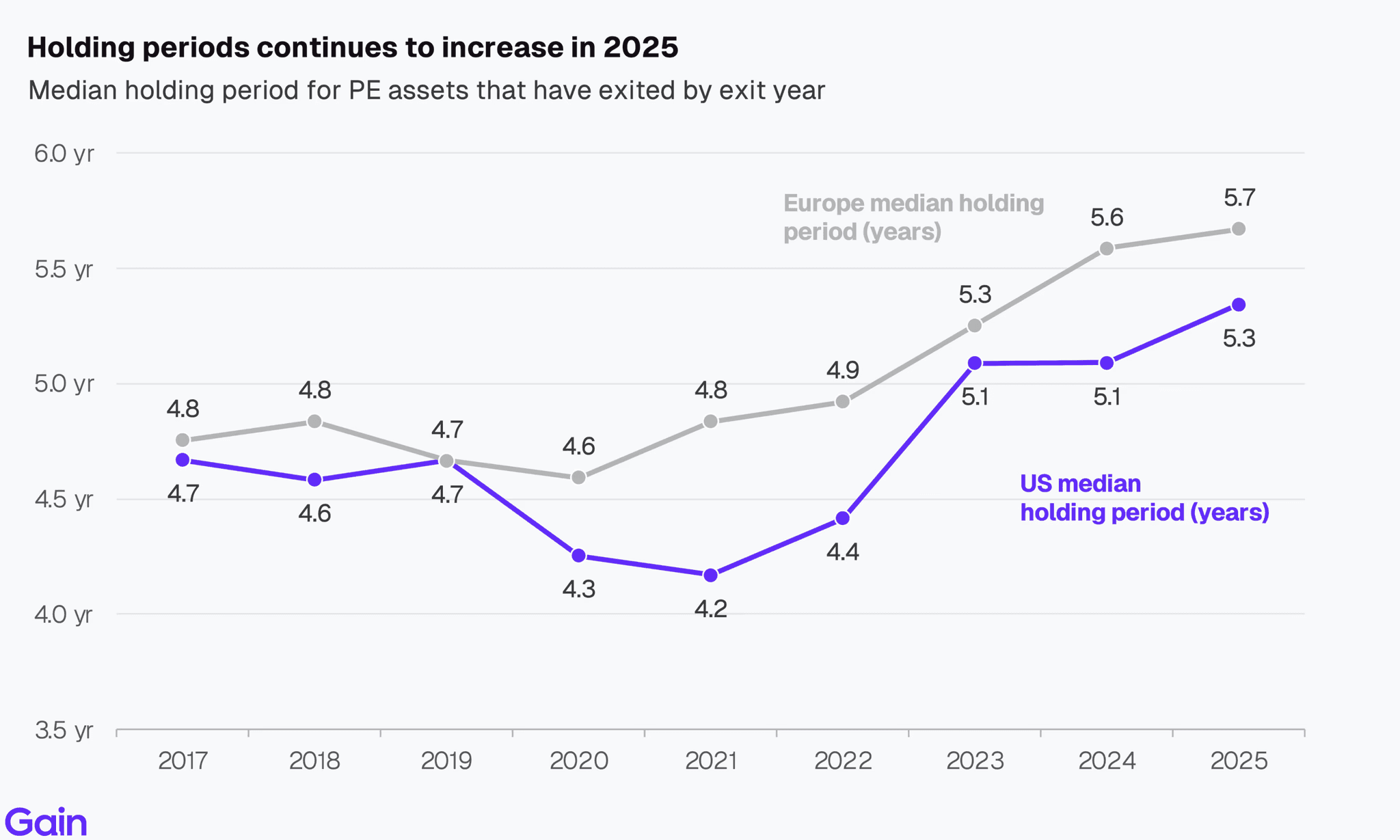
Exits from the 2021 vintage are running behind prior cohorts at the same stage, with only 15% realized by year 4 vs a typical 25–30% range. This reflects the challenge of exiting assets bought at peak valuations. Holding periods rose for the fourth consecutive year. The median company spent 5.3 years in the portfolio in 2025, up from 4.2 years in 2021.
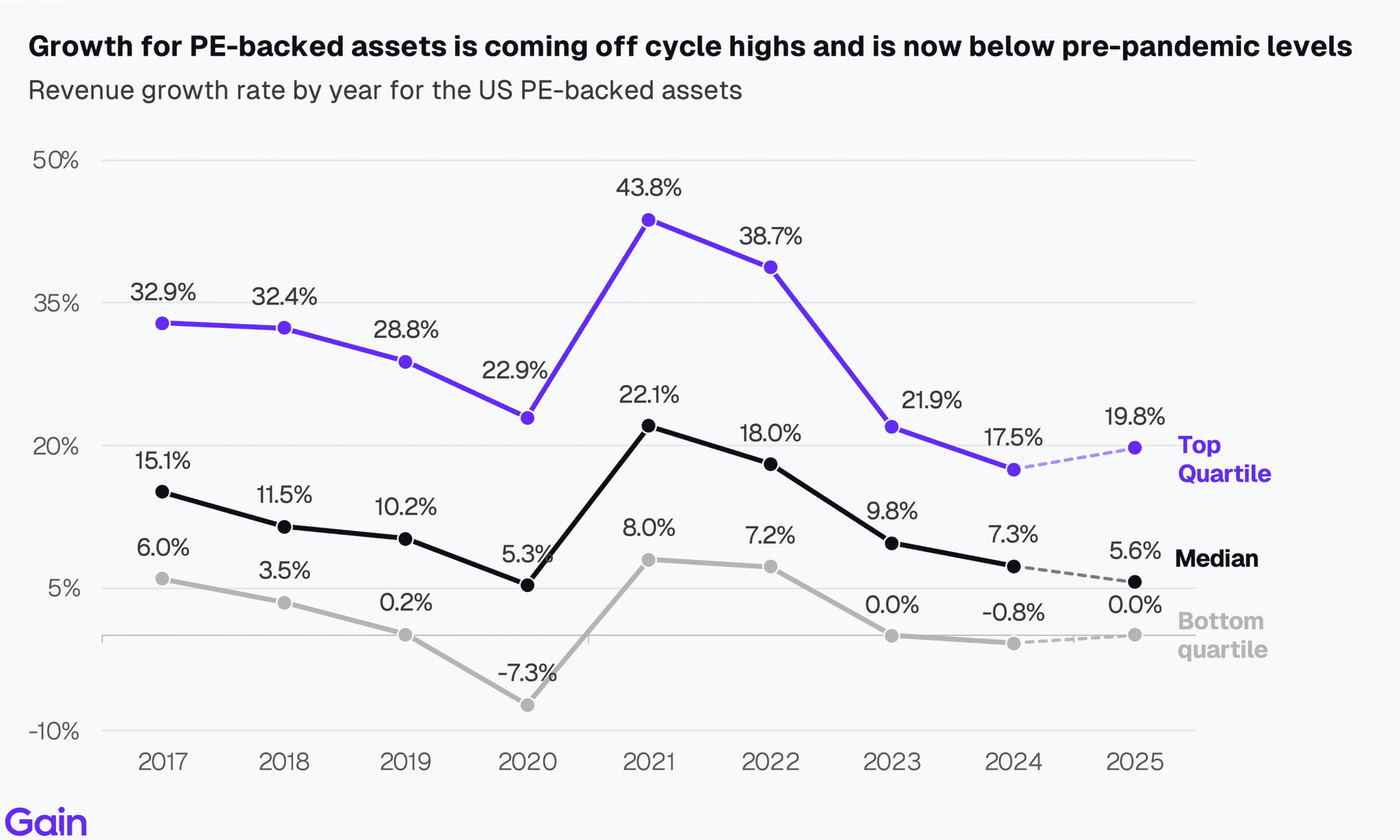
PE multiples rebounded in 2025 (13.2x) but remain well below the 2021 highs (-18%). Growth for PE-backed assets is also coming off cycle highs, now below pre-pandemic levels. The median PE-backed business grew 5.6% in 2025, down from 22.1% in 2021.
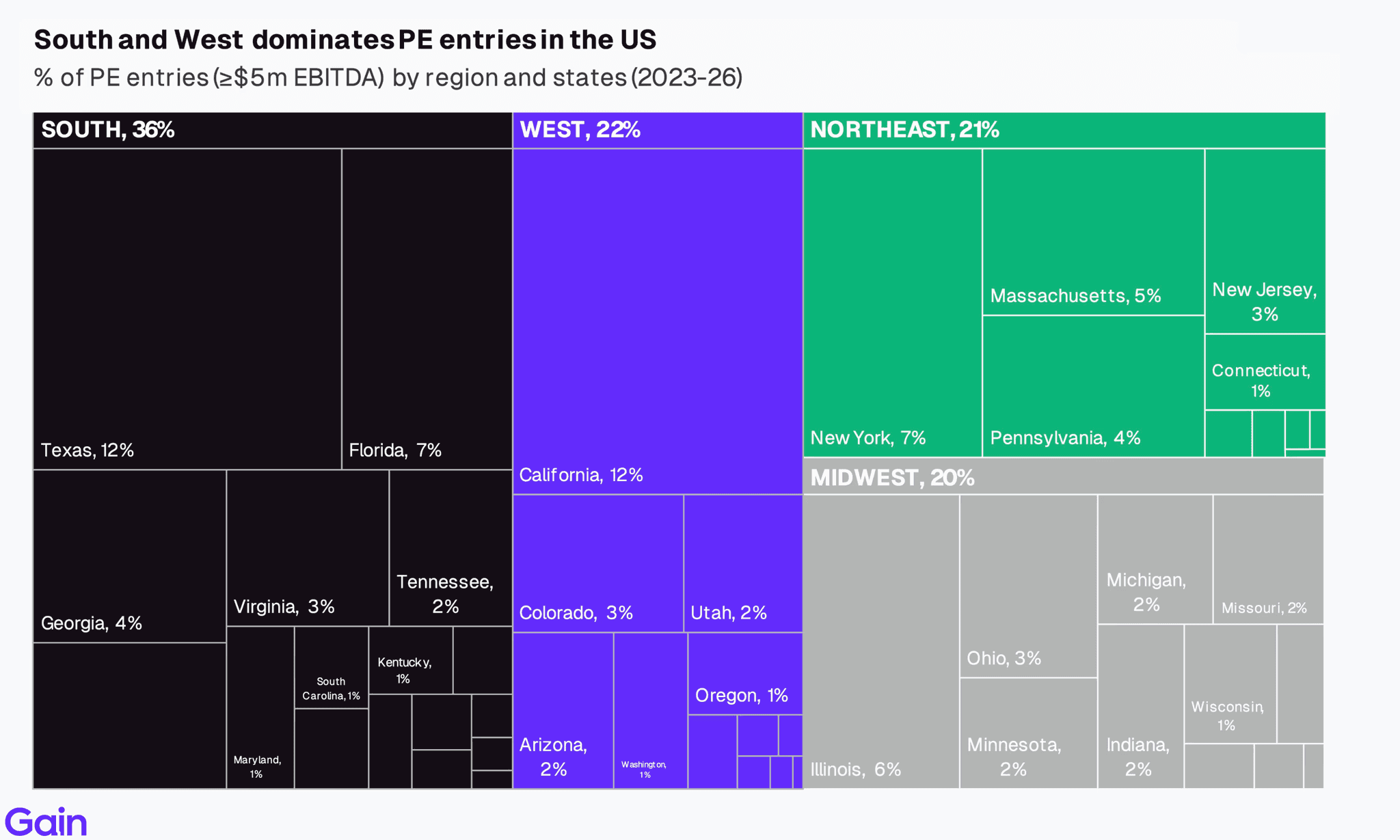
US PE-backed businesses employ 11.1 million people. By sector, Services (33%) and Consumer (19%) are the largest employers, followed by Science & Health (18%) and TMT (13%). By state, California leads with 1.9m employees (17%), followed by Illinois (1.3m), Texas (1.1m), Florida (0.6m) and New York (0.6m).
There is a lot more data and charts to explore in the full report. Reach out on insights@gain.ai if you have any questions.



Chapter 01: Entries
Overall Trend
US PE entry count (>$5m EBITDA) declined marginally in 2025, down 10% yoy. Early 2026 activity, in contrast, points to a stronger start, though it's still early to call the full year given the current macro and geopolitical environment. Monthly data remains resilient so far.
In contrast to deal count, US PE deal value was up 30% year-over-year, reaching its second-highest level on record, just below the 2021 peak. This was driven by a higher concentration of large-deals (>$1bn EV), which account for 81% of total value, up from 70–75% in prior years. Year-to-date, however, dealmaking by value has been slow, particularly in the large-cap segment, with public-to-private transactions almost non-existent.
Entries by Deal Type
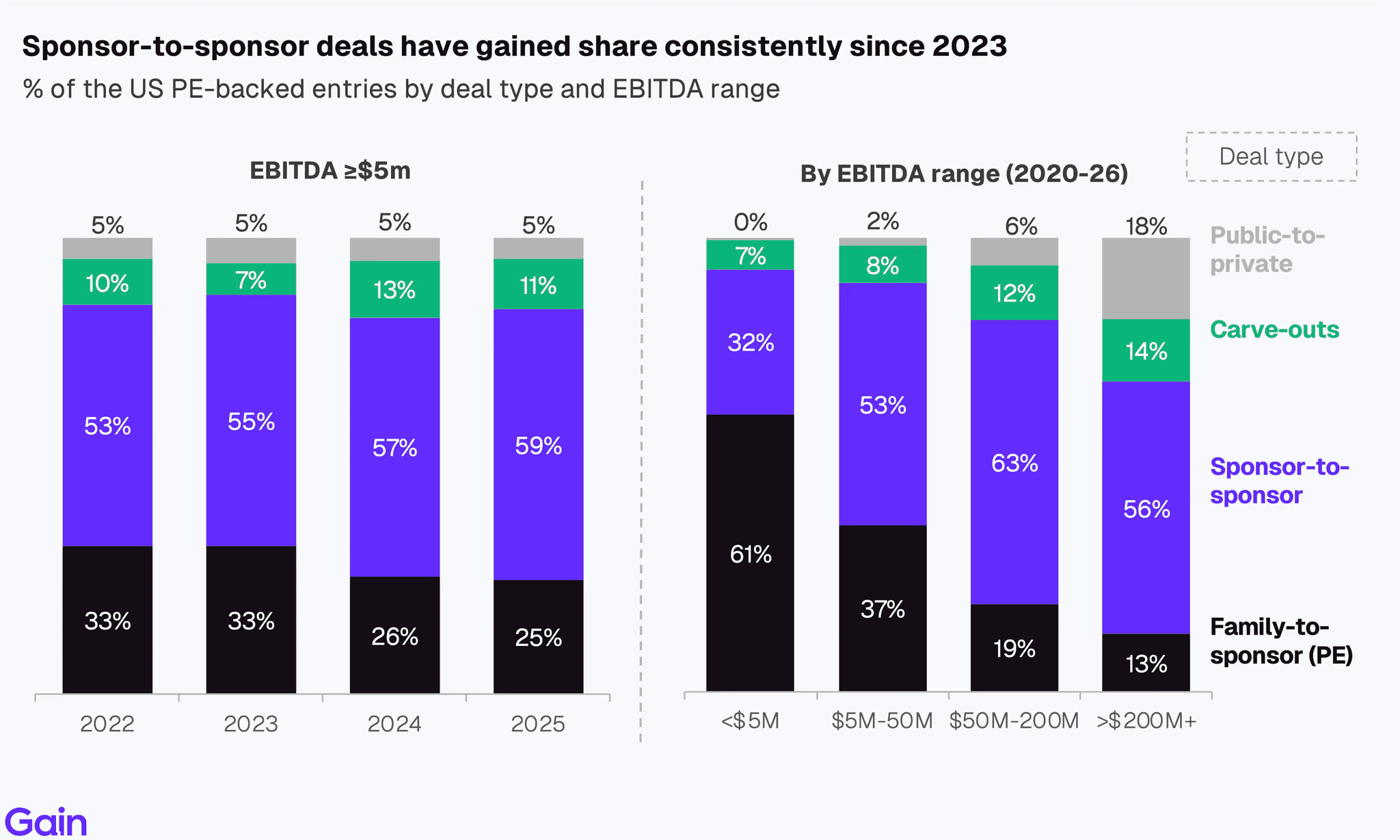
By deal type, sponsor-to-sponsor deals gained share. They accounted for 59% of PE entries over $5m in EBITDA, up from 53% in 2022. Family-to-sponsor deals remain more common in lower EBITDA ranges, while sponsor-to-sponsor deals, carve-outs and take-privates become more common as deal size increased. By deal value, public-to-private transactions surged in 2025, driving a significant uptick in overall deal value.
Chapter 02: Exits
Overall Trend
US PE exits gained momentum in the last two years, with the exit count rising 12% in 2025 compared to 2024. Despite a challenging macro environment, improving debt markets and mounting LP pressure to return capital brought a backlog of delayed exits to market. Early 2026 activity is off to a good start, but the outlook is clouded by current macro and geopolitical uncertainties.
Holding Periods
Holding periods for US PE assets rose for the fourth consecutive year. The median company exiting in 2025 spent 5.3 years in the portfolio, up from 5.1 years in 2024 and 4.2 years in 2021. This trend is even more pronounced in Europe, where assets are held for 5.7 years on average, driven by a higher concentration in Industrials and Consumer, sectors where exit timelines are longer.
Sector and Region
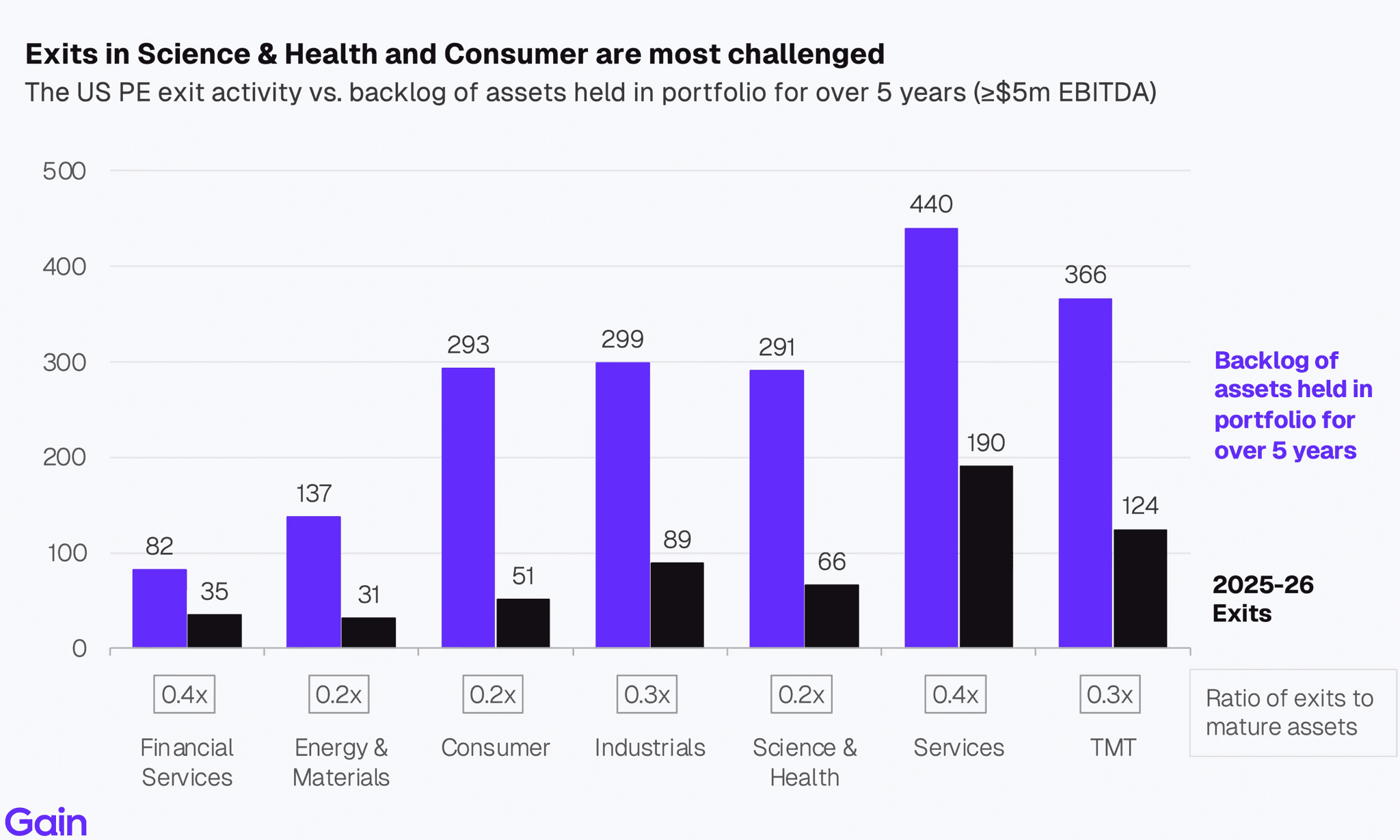
Science & Health and Consumer face the most challenging exit environment, with a high proportion of assets held over 5 years remaining in the backlog. Science & Health is weighed down by regulatory uncertainty and reimbursement overhang, while Consumer assets struggle with slower growth and margin pressure. In contrast, Financials and Services have seen healthier exit activity, supported by stronger earnings momentum and a broader mid-market buyer universe.
Chapter 03: Buy-and-Build
Deal Activity
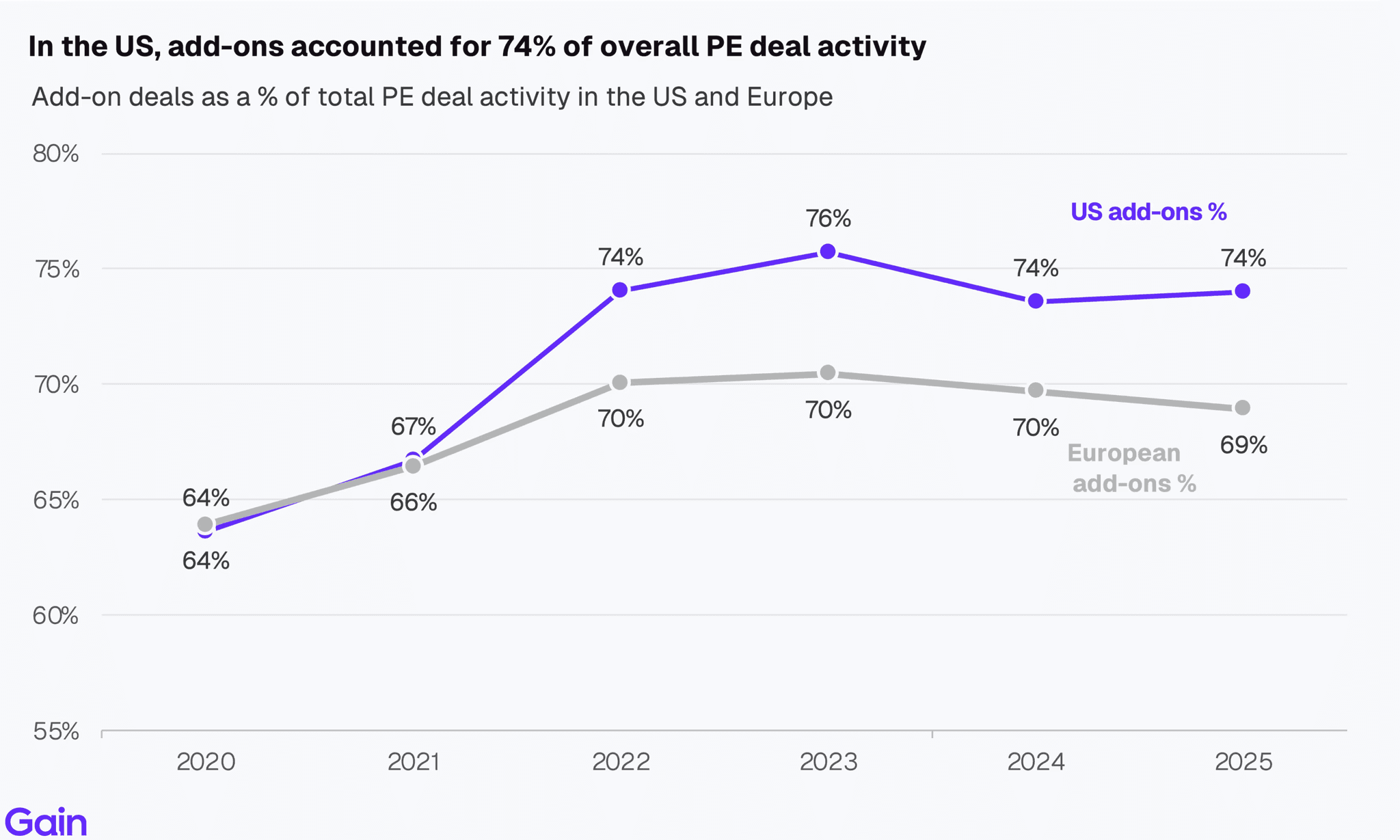
In the US, add-ons accounted for 74% of overall PE deal activity in 2025, with their share holding steady over the past four years. The US market sees more add-ons compared to the European market, where a lower 69% of all deals are add-ons. In both markets, add-on activity has flatlined over the last few years owing to limited multiple arbitrage opportunities, integration challenges, and higher financing costs.
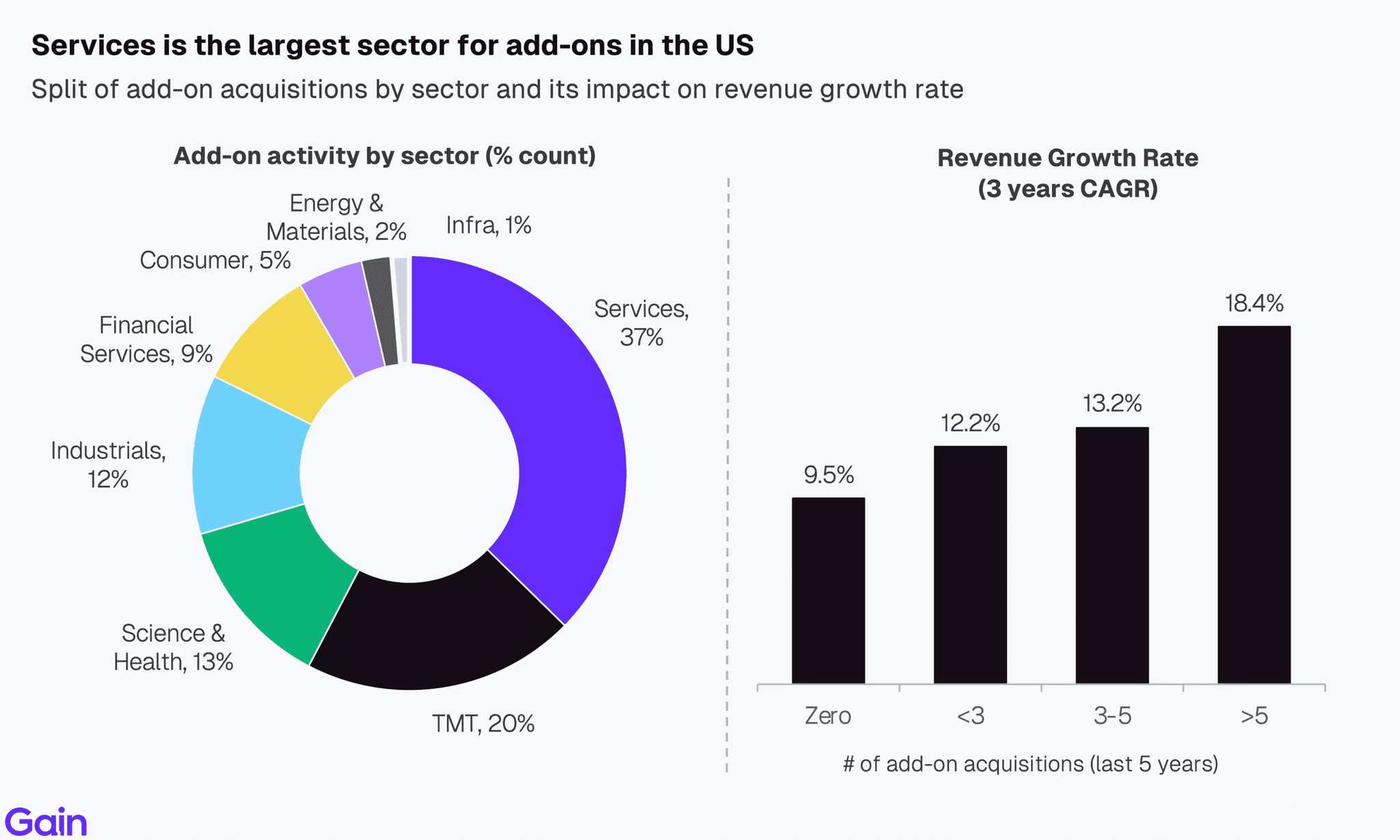
Services is the largest sector for add-ons in the US, accounting for 37% of deals, followed by TMT (20%) and Science & Health (13%). Across all sectors, buy-and-build strategies continue to drive value through accelerated revenue growth and cost synergies.
Largest Consolidators
Financials has 23 of the top 50 most-active consolidators. HUB International leads the list with 108 add-ons over five years, followed by Inszone Insurance Services (98) and King Risk Partners (58). Many US financial institutions pursue strategic acquisitions for both AUM and market share expansion. Services accounts for a further 30% of the most active consolidators, led by Pye-Barker Fire & Safety (70) and Summit Companies (48). TMT and Industrials each represent 8% of the most active acquirers.
Chapter 04: Value Creation & Multiples
Value Creation
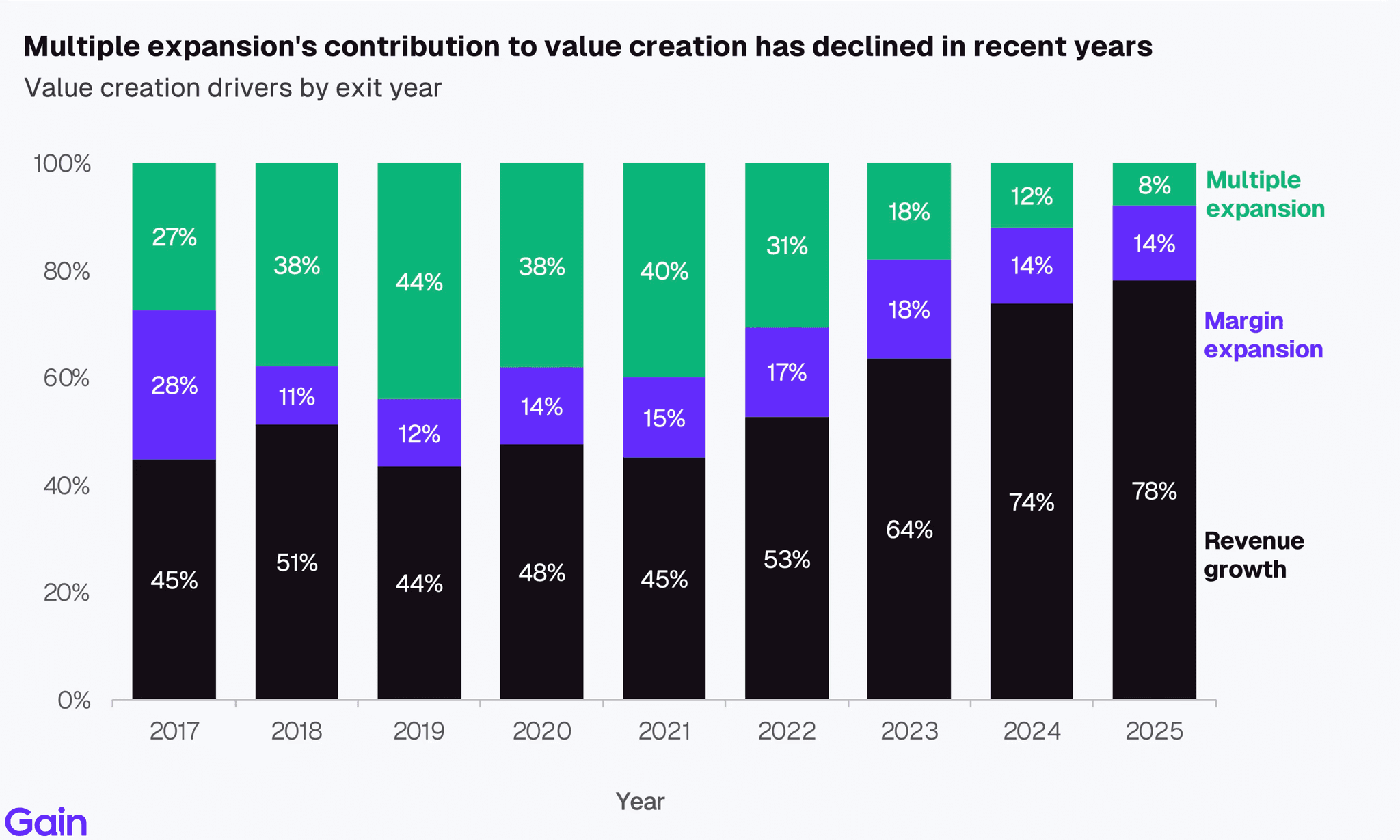
Multiple expansions' contribution to value creation has declined in recent years. It contributed to ~40-45% of returns in 2019-21, driven by higher exit multiples and attractive entry valuations. However, as exit multiples have come down, revenue growth has become the primary driver of value creation (~75-80% of returns). We expect revenue growth to remain the key driver going forward as multiples remain under pressure in this higher-for-longer interest rate environment.
Revenue Growth
Growth for PE-backed assets is coming off cycle highs and is now below pre-pandemic levels. The median PE-backed business grew 5.6% in 2025, down from a high of 22.1% in 2021. Higher input costs, trade tariffs, and muted demand have put downward pressure on growth, compounded by challenging comps from post-pandemic expansion. Given how crucial growth is to PE value creation, any further weakening could dampen PE returns and limit exit opportunities.
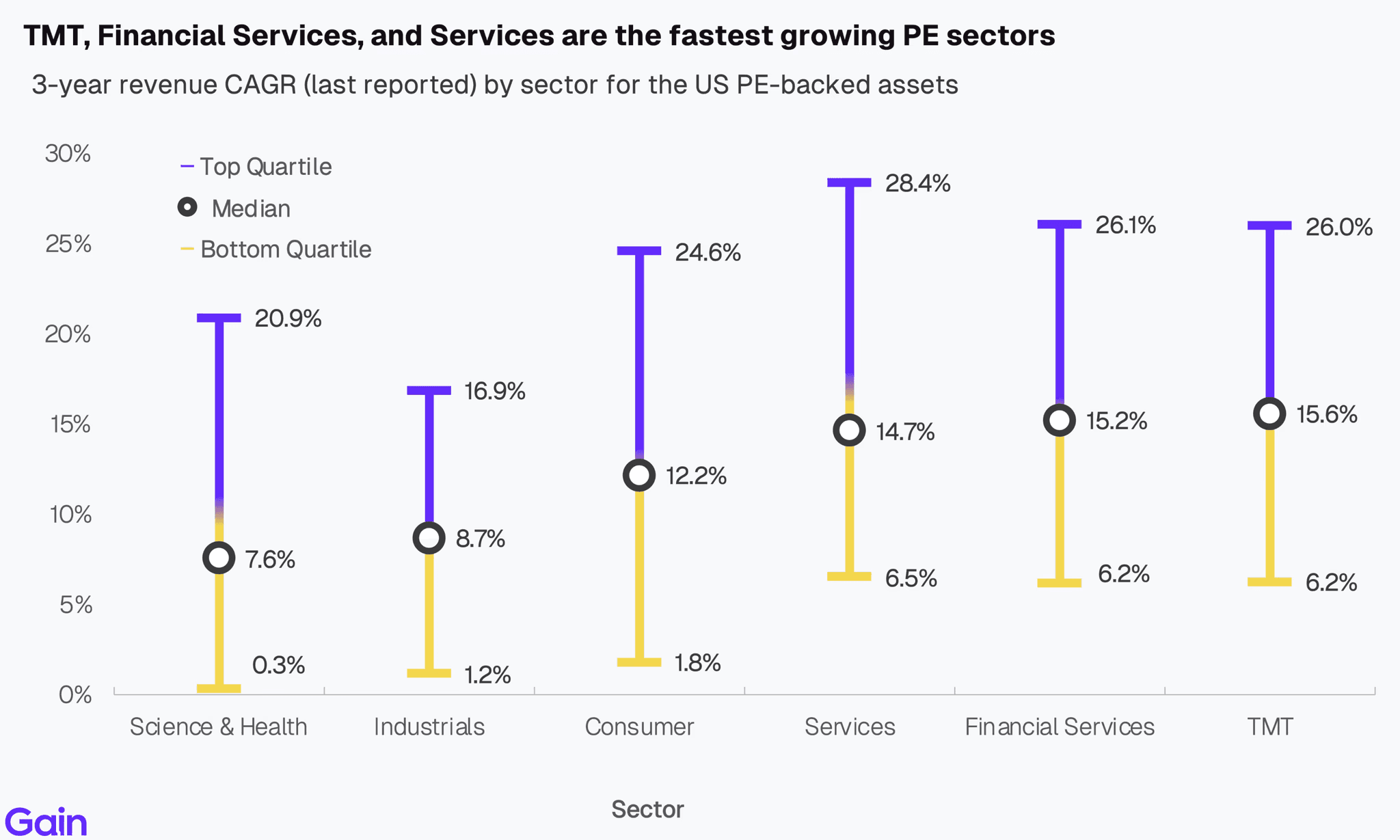
TMT (15.6%), Financial Services (15.2%), and Services (14.7%) are the fastest-growing sectors among US PE-backed assets. Science & Health (7.6%) and Industrials (8.7%), in contrast, have lagged behind. We expect TMT revenue growth to moderate from here on, as AI puts pricing and top-line pressure across certain software categories.
Related Research
Discover our proprietary reports on investors, assets and PE deals.