

Industry research
Solar PV
Scope
Europe
Companies
74
Table of contents
Report collaborator:

Bram Kuijpers, Casper Roex and Henri-Thierry Toutounji, Partners at OC&C Strategy Consultants, provided expert insights for this report. Read the interview transcript here.
Key takeaways
What is the scope of this industry report?
The European solar PV services market comprises businesses that focus on the distribution and installation of solar equipment, along with complementary services for system monitoring and maintenance.
We segmented the landscape based on players’ end-market exposure into:
B2C,
B2B,
Mixed.
What does the Solar PV landscape look like in Europe?
The European solar PV services market remains highly fragmented at the installation level, particularly in the B2C segment, comprising a large number of local installers with limited scale advantages. While growth moderates in mature residential markets, grid bottlenecks, declining subsidies and normalising energy prices further reduce demand momentum, intensify competition and increase pressure on smaller players, driving early-stage consolidation. At the same time, policy volatility, rising financing costs and price pressure, particularly in utility-scale projects exposed to wholesale electricity markets, increase bottom-line margin pressure for incumbents. At the same time, improving self-consumption economics relative to grid export makes solar systems more valuable when paired with storage and optimisation. These trends drive a shift in demand across both B2C and B2B segments away from standalone solar installations toward more premium, integrated energy systems combining solar, battery storage, EV charging and management software, as well as more flexible financing models (e.g. leasing, subscription-based structures).
What does the Solar PV market landscape look like in Europe?
Sponsor-led interest has been moderate, with ~45% of assets being backed by financial sponsors (April 2026).
Investors are primarily attracted by:
The underpenetrated, policy-supported European rooftop solar PV segment driving structural long-term growth and retrofit demand,
Increasing system complexity enabling higher-value integrated offerings,
Growing utility-scale solar deployment driving larger project sizes and higher B2B ticket revenues.
On the other hand:
Slowing incremental installation growth in the near term due to subsidy decline, grid constraints and weaker residential demand,
Price cannibalisation reducing realised electricity prices and eroding project economics,
Rising input costs linked to Chinese supply chain dependency serve as key deterrents for investors.
What are the key ESG considerations in the EU Solar PV industry?
ESG considerations in the European solar PV services market are predominantly driven by environmental and social issues. Environmental risks stem from resource-intensive upstream manufacturing and growing end-of-life panel waste, with incumbents responding through early-stage circularity initiatives such as recycling and refurbishment. On the social side, the heavy reliance on Chinese imports exposes incumbents to labour and human rights risks, particularly in polysilicon sourcing. Players address these issues through procurement measures, including supplier due diligence and codes of conduct.
Company benchmarking
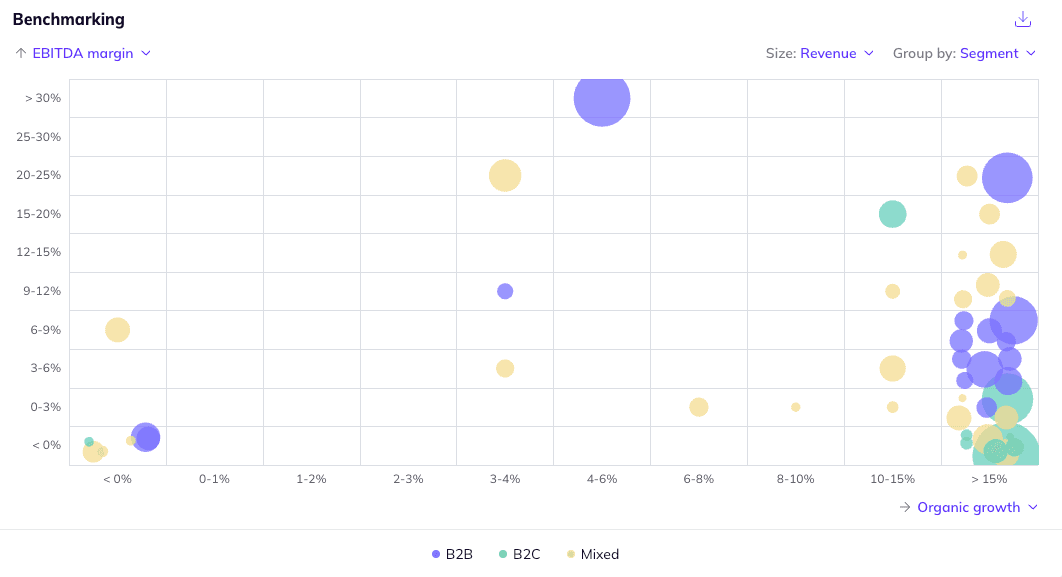
Market growth
Cumulative installed solar PV capacity in the EU-27 reached ~406 GW in 2025 and is projected to grow to ~718 GW by 2030 (+12.1% CAGR 2025-2030; SolarPower Europe, December 2025)
Rooftop solar PV installations (including residential and C&I) in the EU-27 reached ~247 GW cumulatively in 2025 and are expected to increase to ~397 GW by 2030 (+10.1% CAGR 2025-2030; SolarPower Europe, December 2025)
Positive drivers
Significant opportunities in both new installations and a large retrofit opportunity, accelerated by regulatory tailwinds, which mandate the rollout of solar panel installations across new and renovated buildings from 2026 onwards, driving sustained long-term demand for solar PV services. To illustrate, EU rooftop solar PV represents an underpenetrated, policy-supported growth segment, with only ~10% rooftop penetration despite the potential to supply ~40% of EU electricity demand by 2050 (European Commission, January 2026; European Commission, August 2025)
Opportunities for incumbents to offer one-stop-shop capabilities due to rising system complexity from integrating solar PV with batteries, heat pumps, EV charging and energy management software into a unified system that optimises self-consumption, reduces costs and improves grid efficiency through better load balancing. This allows players to increase wallet share and expand into higher-value, less commoditised services beyond standalone installation (OC&C expert interview; SolarPower Europe, December 2025; Intersolar Europe, August 2025)
Rising project sizes on the back of utility-scale solar growth, accounting for >50% of new installations in the EU in 2025, as Europe expands renewable capacity to support energy security and independence. As a result, B2B service providers will see higher ticket revenues (SolarPower Europe, February 2026; Mercom, January 2026; Innovation Origins, December 2025)
Negative drivers
Ongoing grid bottlenecks, normalising electricity prices and reduced feed-in tariffs have lengthened payback periods and softened residential demand, resulting in hampered installation momentum and increased competitive pressure on smaller regional installers. To illustrate, Europe’s annual solar installation growth moderated in 2025 (with its first slowdown since 2016), reflecting a short-term softening in deployment trends (OC&C expert interview; SolarPower Europe, December 2025; Reuters, December 2024)
Rapid solar PV growth in Europe has lowered daytime electricity prices, with German solar plants capturing ~50% of average wholesale electricity prices and Spanish capture rates projected to fall to ~45% by 2035. Oversupply has also led to solar curtailment (~1.1 TWh of solar power wasted in Germany in 2025, with ~100% YoY increase), reducing returns for solar operators. This hampers demand for solar service providers in the medium term (Clean Energy Wire, March 2026; S&P Global, July 2025; Reuters, April 2024)
The removal of Chinese export tax rebates on PV products is expected to raise module prices by up to ~20%, directly impacting a supply chain heavily dependent on Chinese imports with limited near-term diversification options. This will compress bottom-line margins of European solar PV service providers and affect customer demand if costs are passed through (OC&C expert interview; Reuters, January 2026)
Fill out the form to request your copy of the Solar PV industry report
With the full report, you’ll gain access to:
Detailed assessments of the market outlook
Insights from c-suite industry executives
A clear overview of all active investors in the industry
An in-depth look into 74 private companies, incl. financials, ownership details and more.
A view on all 237 deals in the industry
ESG assessments with highlighted ESG outperformers
Discover hundreds of niche industry reports on Gain
Deep dive into additional industries to understand their market outlook, positive and negative drivers, and more!